How to foster a small pet
Learn what’s involved in fostering a small pet with the RSPCA. Discover how the process works, the support we provide, and how to give animals like guinea pigs, hamsters and rats a safe, comfortable home while they wait for adoption.
Jump to:
Small pet foster process
Register as a volunteer
If you’re wondering how to foster a small pet with the RSPCA, the first step is to register as a volunteer through our platform. This helps us learn more about your home environment, your availability and the types of animals you may be able to support. Once registered, you can explore opportunities to foster a small pet near you, through your local RSPCA branch or animal centre.
Apply for a pet fostering role
When you find a role you’re interested in, you can apply to become a small pet foster carer. Our team will review your application to understand your setup, lifestyle and the type of animal you’re best suited to foster. The aim is to make sure the placement works well for both you and the animal in your care.
Home check and training
If your application is suitable, we’ll arrange a home visit or virtual assessment.
This helps us make sure your home environment is safe and appropriate for small animals, including space for enclosures and quiet areas away from stress.
We’ll also provide guidance on handling, housing, enrichment and daily care, so you feel confident supporting your foster pet.
Collect your foster pet
When matched, you’ll collect your foster pet from the animal centre or another agreed location. We’ll provide advice on enclosure setup, feeding and routine, so you can help them settle in safely.
Ongoing support
Fostering placements vary depending on the animal’s needs. Some may last a few weeks, while others may continue for longer. During this time, our team will stay in touch and offer support and advice whenever needed. Your role is to provide a safe, calm environment, while the animal prepares for the next stage of their journey.
Why foster a small pet?
Fostering plays an important role in helping small animals recover and prepare for their future homes.
Animals like guinea pigs, hamsters, rats and other small pets can become stressed in busy environments, or may need time to recover from illness or poor conditions. A foster home gives them a quieter, more stable space where they can rest, build confidence and experience normal routines.
Young animals may also need foster homes while they grow and develop, before they’re ready for adoption.
For foster carers, it can be a rewarding experience. Whether you foster a guinea pig or hamster, you’ll help an animal feel safe and comfortable, while supporting our rescue work.
Support we provide
When you foster a small pet with the RSPCA, we support you throughout the placement.
Our teams usually provide:
Food and basic supplies
Veterinary care and treatment
Advice on housing, handling and enrichment
Ongoing contact with a fostering coordinator
This support helps make sure both you and your foster pet feel confident and cared for.
What you need to foster a small pet
You don’t need previous experience to foster a small pet, and a range of home environments can be suitable.
The most important qualities are patience, attention to detail and a willingness to follow care guidance, as small animals can have specific housing and handling needs.
Every placement is assessed individually, but generally you’ll need to:
- Be aged 18 or over
- Have permission from your landlord if you rent
- Provide a safe, secure enclosure and appropriate space
- Be able to monitor health and behaviour closely
- Follow guidance on handling and daily care
- Keep in touch with your local RSPCA team
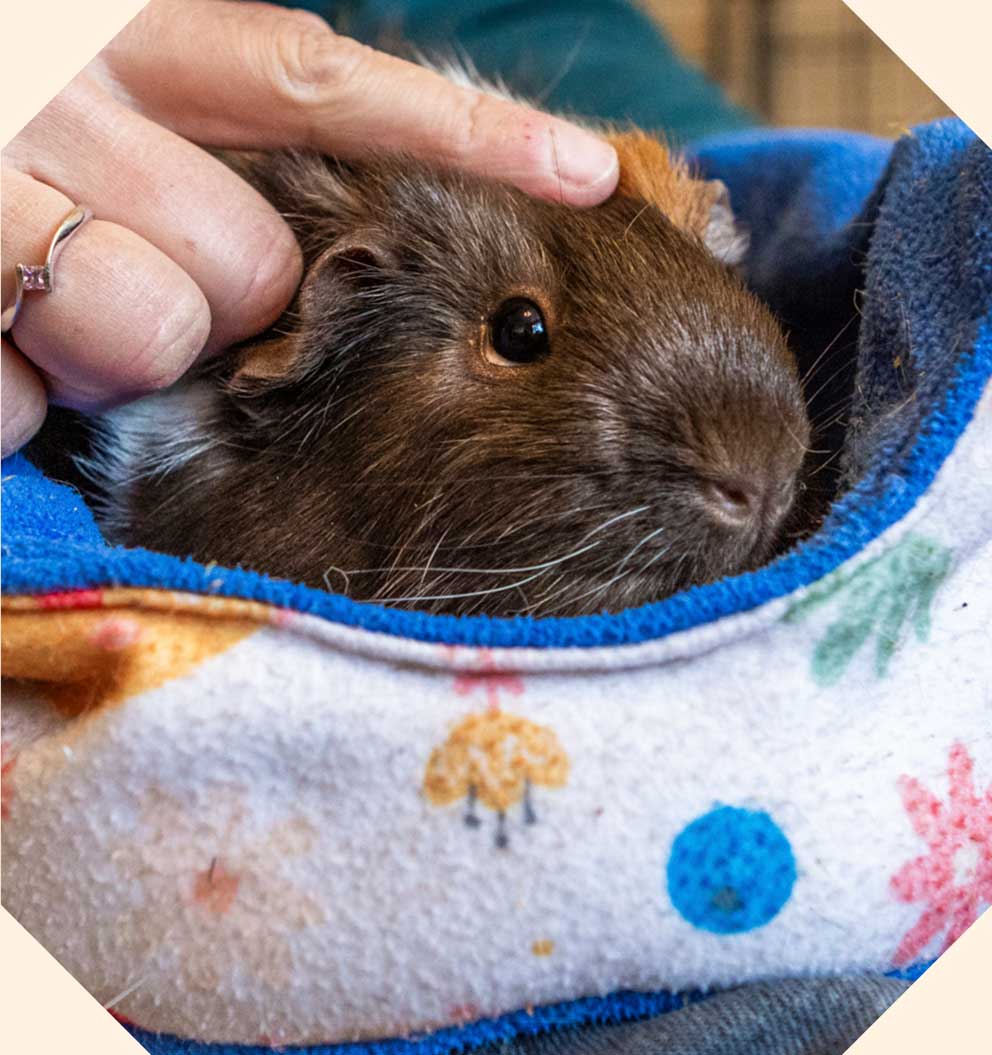
give a small pet a temporary home
How to apply to foster a small pet
If you’re ready to foster a small pet with the RSPCA, the first step is registering through our volunteer platform. From there you can:
- Browse opportunities to foster a small pet near you
- Register and apply for a suitable fostering role
- Speak with your local team about potential placements
- Our teams will guide you through the next steps and help match you with a farm animal that would benefit from your home environment

Frequently asked questions
-
Possibly. Some small pets may be suited to family homes, while others may need a quieter environment. We’ll help match you with an animal that fits your household.
-
Small pets need daily care, including feeding, cleaning and monitoring. Many people foster alongside work or other commitments, as long as these needs can be met.
-
You’ll need to be aged 18 or over to foster independently, so you can take responsibility for the animal’s care and stay in contact with the RSPCA team.
-
No formal qualifications are needed. You don’t need previous experience, as our team will provide guidance and support to help you feel confident.
-
Placements vary depending on the animal’s needs. Some may last a few weeks, while others may need longer care before they’re ready for their next home.
-
Case animals are those involved in welfare or legal investigations. They may stay in foster care while their situation is resolved, and outcomes can include rehoming, returning to their owner, or ongoing care.
-
Small pets need space to explore and stay active, along with appropriate handling rather than formal training. We’ll guide you on the specific needs of your foster pet.
-
The RSPCA usually covers essential costs such as food and veterinary care. Your local centre will explain what support is provided for each placement.